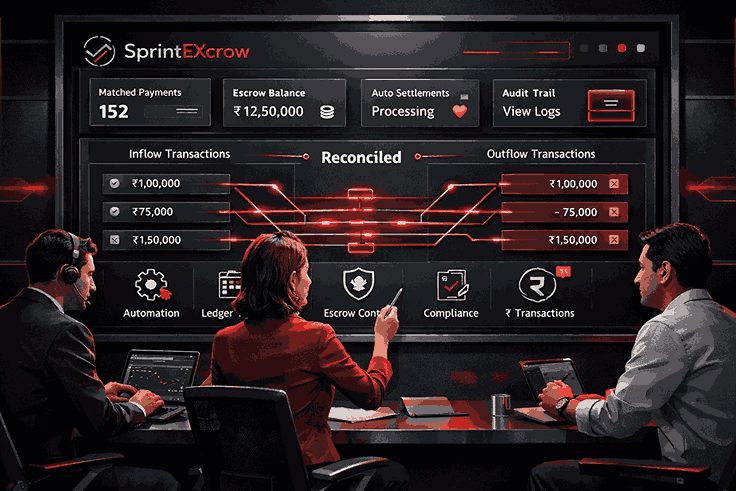
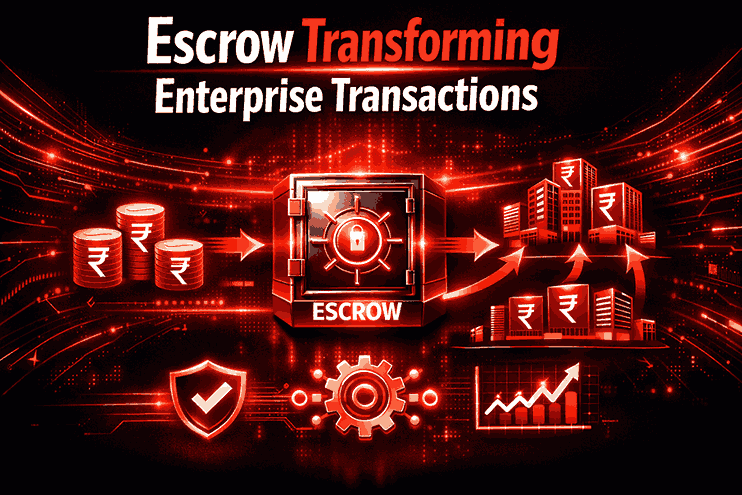
Reconciliation is the process of matching two entries or two statements with each other so that both sides tally perfectly, such as matching a buyer’s payment with a seller’s settlement in an escrow transaction. In traditional setups, this is slow, manual, and error?prone, especially when you are managing COD, multi?party deals, or high?value B2B contracts. SprintEXcrow, PaySprint’s Escrow?as?a?Service (EaaS) platform, is designed to eliminate these bottlenecks through bank?grade infrastructure, automated fund flows, and a transparent analytical dashboard that lets businesses see every rupee move in real time.
SprintEXcrow builds on proven money escrow and software escrow frameworks to ensure that every transaction remains secure, traceable, and fully reconciled end-to-end.
Table of Contents
What Is Reconciliation in Escrow?
The Reconciliation Challenges Businesses Face Today
How SprintEXcrow Works Behind the Scenes
Reconciliation With SprintEXcrow: Key Capabilities
Industry Use Cases Where Reconciliation Matters Most
Why SprintEXcrow Is Built for Modern CFOs and Founders
Getting Started With SprintEXcrow
Conclusion
Frequently Asked Questions
What is reconciliation in escrow?
In an escrow environment, reconciliation means matching all incoming payments (pay?ins) with outgoing settlements (pay?outs) and ensuring that the balances in the escrow account, the platform’s internal ledger, and the bank statements all line up exactly. This includes mapping each transaction to its correct buyer, seller, invoice, and settlement schedule. For SprintEXcrow, reconciliation is not just a back?office task but a core product promise: full visibility of fund flow from initiation to final release so that no transaction is “lost in transit”.
This level of control becomes especially important when comparing escrow vs traditional instruments like letters of credit, where visibility and automation differ significantly.
The reconciliation challenges businesses face today
Many businesses still rely on spreadsheets, manual approvals, WhatsApp screenshots, and scattered bank statements to reconcile their high?value or COD?heavy flows. This leads to delayed settlements, locked?up working capital, and frequent disputes between buyers, sellers, and intermediaries. As transaction volumes and payment channels grow, finance teams struggle to maintain daily reconciliation, resulting in leakages, mis-postings, and compliance risks around escrow and nodal accounts.
Key pain points include:
Multiple payment modes (UPI, cards, netbanking, wallets, COD) flowing into different accounts and gateways.
Difficulty in mapping each collection to an order, invoice, or milestone.
Delayed or mismatched settlements to sellers, vendors, or partners.
Limited visibility into what is stuck, what is settled, and what is disputed at any point in time.
How SprintEXcrow works behind the scenes
SprintEXcrow is an Escrow as a Service platform that sits between transacting parties and their banking partners, acting as a neutral, digital trustee. It holds funds in escrow with leading public and private sector banks and releases them only when pre?defined conditions are met, such as delivery confirmation or milestone completion. For every transaction, SprintEXcrow programmatically records pay?ins, applies business rules, and schedules pay?outs via its integrated PayIn and PayOut APIs, ensuring that each rupee has a clear, auditable journey.
Core building blocks:
Escrow accounts with top?tier banks, managed via a trusted TSP (PaySprint) infrastructure.
API?first fund collection and settlement rails for seamless integration with platforms, apps, and ERPs.
A smart analytics dashboard that provides real?time visibility into balances, transactions, and settlement statuses.
Reconciliation with SprintEXcrow: key capabilities
SprintEXcrow is intentionally designed to reduce “endless reconciliation” by giving finance and operations teams a single source of truth for all escrow flows. Instead of reconciling across multiple bank portals and files, teams can match entries and statements directly within SprintEXcrow’s dashboard and APIs.
Key reconciliation?centric capabilities include:
Unified ledger view: All pay?ins and pay?outs across channels are mapped to a single transaction ledger, making one?to?one reconciliation with bank statements and internal systems significantly easier.
Automated matching rules: Configurable rules auto?match collections with orders, invoices, or milestones, reducing manual effort and human error.
Real?time tracking: The dashboard shows transaction status (initiated, in escrow, released, refunded, disputed) so that open items can be reconciled quickly.
Multi?channel control: Businesses can monitor and reconcile flows from different payment channels and use cases on one interface instead of juggling multiple tools.
Audit?ready data trails: Every action—fund receipt, hold, release, refund—is logged, making reconciliations and regulatory audits smoother.
Industry use cases where reconciliation matters most
SprintEXcrow targets reconciliation?intensive use cases where trust, speed, and clarity around fund movement are critical.
Real estate and property deals: Funds are held in escrow and released only after property handover and verification, simplifying reconciliation between buyers, sellers, brokers, and developers.
B2B contracts and services: Enterprises can tie payments to milestones and reconcile every release with corresponding deliverables and approvals.
High?value purchases and luxury goods: Platforms can protect both buyer and seller while maintaining clean, reconciled ledgers on every order.
Multi?party platforms and marketplaces: Complex arrangements with aggregators, merchants, vendors, and logistics partners become easier to reconcile when everyone’s share flows through one escrow layer.
COD?heavy businesses: SprintEXcrow’s focus on reducing delayed approvals and locked?up COD directly addresses reconciliation delays for offline and hybrid payment flows.
Why SprintEXcrow is built for modern CFOs and founders
For modern CFOs, controllers, and founders, reconciliation is not just about closing the books; it is about liquidity, governance, and stakeholder trust. Automated escrow reconciliation enables faster settlement cycles, more predictable cash positions, and better working capital management. SprintEXcrow combines regulated bank partnerships with PaySprint’s API expertise to deliver a reconciliation?friendly stack that scales from early?stage startups to large enterprises.
Benefits include:
Shorter reconciliation cycles and fewer open items.
Lower risk of fraud, misallocation, and disputes.
Stronger compliance posture through clear separation of escrow funds and operational balances.
Reduced manual workload for finance and operations teams, freeing them to focus on analytics and growth.
Getting started with SprintEXcrow
Businesses can integrate SprintEXcrow through APIs into their existing platforms, backend systems, or mobile apps, enabling automated escrow flows and reconciliations without rebuilding their entire stack. With dedicated trusteeship and onboarding support, PaySprint helps design escrow flows, mapping business rules, reconciliation needs, and reporting expectations from day one.
Typical steps:
Define use case, transaction flows, and reconciliation requirements.
Configure escrow structure, roles (buyer, seller, trustee), and settlement rules with SprintEXcrow.
Integrate PayIn and PayOut APIs and map internal order/invoice IDs for smooth matching.
Go live with real?time monitoring and analytics for continuous reconciliation improvement.
Businesses can explore SprintEXcrow’s full escrow and reconciliation capabilities directly on the SprintEXcrow platform.
Conclusion
Reconciliation is no longer a back?office headache; it is a strategic lever for building trust, improving liquidity, and scaling high?value digital transactions. By combining bank?grade escrow accounts, API?driven fund flows, and a transparent analytics dashboard, SprintEXcrow turns the process of “matching two entries or two statements to tally each other” into an automated, real?time capability for modern businesses. For any organisation handling complex or high?value transactions, adopting SprintEXcrow means fewer reconciliation surprises and more confidence in every rupee that moves through the ecosystem.
Frequently Asked Questions
1. What is reconciliation in the context of SprintEXcrow?
Reconciliation in SprintEXcrow refers to matching all pay?ins and pay?outs, ensuring that the escrow account balance, transaction ledger, and underlying business records all align without discrepancies. It covers the full lifecycle—from when funds enter escrow to when they are released, refunded, or reversed.
2. How does SprintEXcrow help reduce reconciliation effort?
SprintEXcrow centralises all escrow flows into a unified ledger, uses APIs to automate collections and settlements, and provides a dashboard for real?time tracking and reporting. This significantly lowers manual work compared to reconciling across multiple bank portals, files, and payment gateways.
3. Is SprintEXcrow suitable for COD and offline-heavy businesses?
Yes, SprintEXcrow is explicitly positioned to address delayed approvals, locked?up COD, and endless reconciliation challenges that slow down offline and hybrid businesses. By offering multi?channel control and transparent tracking, it helps these businesses move money faster while staying reconciled.
4. Which industries can benefit the most from escrow reconciliation with SprintEXcrow?
Industries such as real estate, e?commerce marketplaces, B2B services, luxury and high?ticket retail, and multi?party platforms benefit the most because they handle high?value or complex multi?stakeholder transactions. In all these segments, accurate, timely reconciliation is critical for settlements, compliance, and trust.
5. How does SprintEXcrow support compliance and audits around reconciliation?
By working with scheduled commercial banks and maintaining clear separation of escrow funds, SprintEXcrow supports compliance expectations around escrow and nodal accounts. Its detailed transaction logs and analytics make it easier to generate reconciliation, settlement, and audit reports when required.