Escrow for Real Estate Transactions in India: A Complete Guide
Real estate escrow is the financial safeguard that decides whether your money actually goes toward your flat — or quietly funds someone else's project down the road. Buying property in India has always carried this quiet, nagging risk: you pay the developer well before the building exists, and you have to trust that funds are used the way they're supposed to be.
For years, that trust was misplaced more often than buyers would like. Developers routinely diverted funds collected for one project to bankroll another, leaving early projects stalled and buyers stuck in limbo for years.
The Real Estate (Regulation and Development) Act, 2016 (RERA) was built specifically to close that gap — and its escrow account mandate is the mechanism that does the heavy lifting.
Table of Contents
What Is a Real Estate Escrow Account?
The RERA 70% Escrow Rule — How It Works
Why This Matters: The Problem RERA Escrow Solves
How to Open a RERA Escount
What This Means for Homebuyers
row AccWhat This Means for Developers
Escrow in Real Estate: Beyond RERA Compliance
Frequently Asked Questions
Conclusion
What Is a Real Estate Escrow Account?
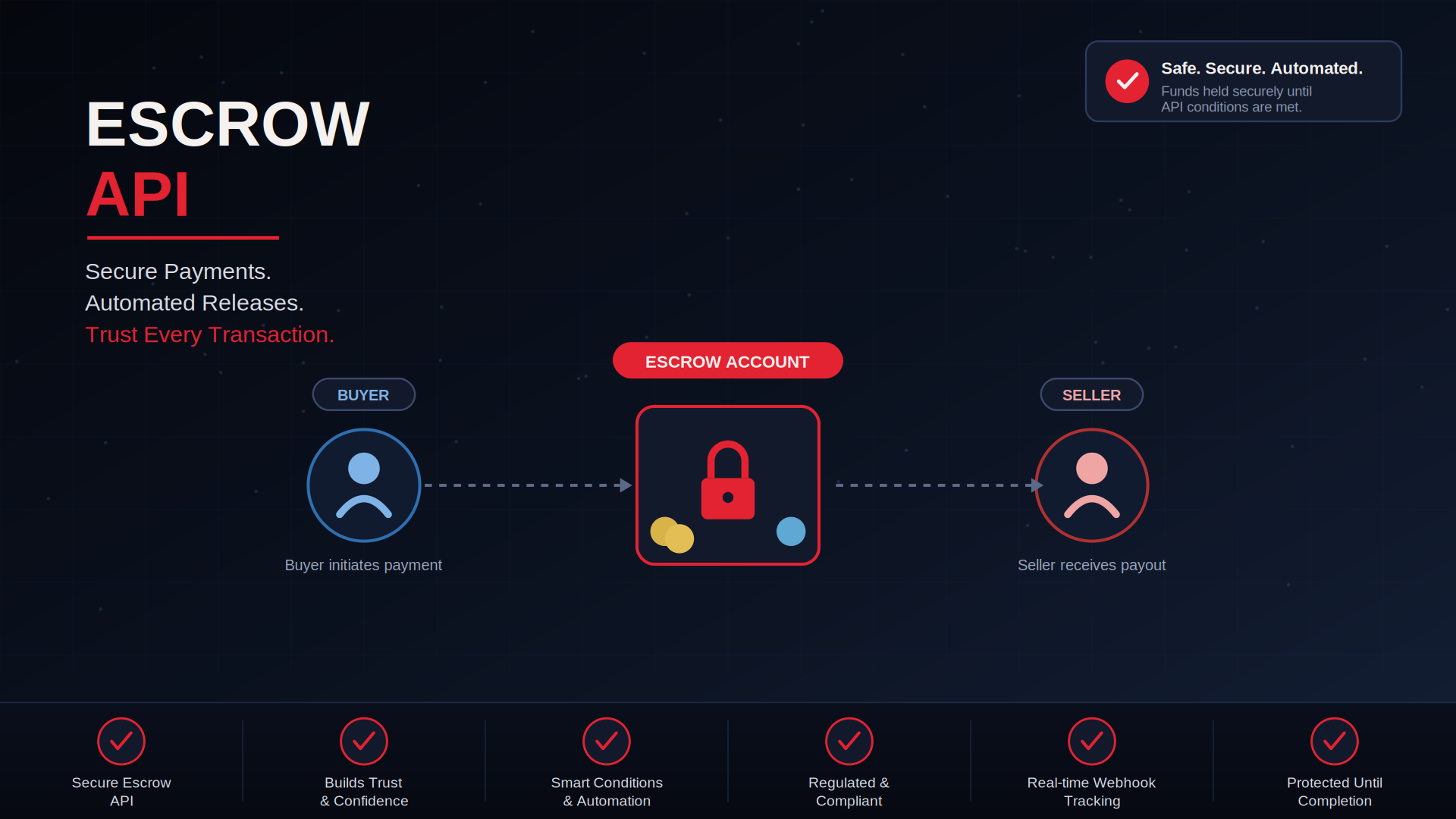
A RERA escrow account is a specific type of account mandated by the Real Estate (Regulation and Development) Act, 2016, held by the developer of an upcoming construction project, covering both residential and commercial developments. As developers collect funds from buyers through down payments and instalments as per the payment schedule in the sale agreement, those payments are deposited into this dedicated account. The developer can withdraw the funds only for the construction of that specific project, and only after obtaining the necessary approvals.
The RERA 70% Escrow Rule — How It Works
In India, RERA mandates the use of an escrow account in all real estate projects with a cost of more than ?500 lakhs or more than eight apartments, whichever is less. Mandatorily, 70% of the funds collected by the developer from buyers must go into this RERA escrow account, with deposits and withdrawals regulated under the RERA Act, 2016.
Under the recent RERA 2.0 reforms, the flow has become even more structured:
Buyer payments first go into a "Collection Account." From there, 70% is automatically moved into a locked "Separate Account" — money that can only be used for the actual construction costs of the project — materials, labor, and land-related expenses, not marketing budgets or unrelated projects.
Key rules governing RERA escrow accounts include:
70% of buyer funds must mandatorily be deposited into the escrow account
Funds can only be used for construction of that specific project
Developers must provide regular updates on the status of the escrow account
Withdrawals require certification from an engineer, an architect, and a chartered accountant before funds can be released
Mandatory third-party audits and regular reporting are required on the funds deposited into these accounts under RERA 2.0, removing the earlier practice of builders using one project's buyer money to fund another.
This certification chain is what makes real estate escrow different from a simple locked bank account — money is only released as construction genuinely progresses, verified by independent professionals rather than the developer's own say-so.
Why This Matters: The Problem RERA Escrow Solves
Before RERA, buyer advances were often treated as discretionary working capital by developers — funds collected two years earlier for one project could be redeployed elsewhere entirely, and buyers often discovered this only after it was too late. RERA's 70% escrow requirement dismantled that model at its foundation, more accurately functioning as a financial architecture — a set of constraints on capital flows — rather than simply a consumer-protection slogan.
The practical result: a developer can no longer use your booking amount to plug a cash-flow gap on a different, unrelated site. If they try, the certification and audit requirements are designed to catch it.
How to Open a RERA Escrow Account
Developers can open a RERA escrow account with a scheduled bank in India, typically by submitting an application to the bank along with the required documentation. The process generally involves:
Project RERA registration — projects above 500 sq. m. or with 8+ apartments must register with the state RERA authority before any marketing or sale of units can begin.
Bank selection and account opening — the developer opens a dedicated, project-specific escrow account with a scheduled bank or an authorized escrow service provider.
Structured fund routing — buyer payments are directed into the collection account, with the mandated 70% automatically routed to the locked construction account.
Certified withdrawals — funds are released against verified construction milestones, each backed by engineer, architect, and CA certification.
Ongoing audits and reporting — mandatory third-party audits and regular reporting keep the account status visible to regulators and, increasingly, to buyers.
What This Means for Homebuyers
If you're evaluating an under-construction property, the escrow account is one of your strongest due-diligence checkpoints. Buyers should:
Review escrow account disclosures and third-party audit reports before booking
Verify the project's RERA registration number on the relevant state RERA portal
Confirm the sale agreement's payment schedule aligns with the certified construction milestones
Understand that funds can only be withdrawn in line with prescribed construction progress and certification requirements — a structure specifically designed to reduce the risk of fund diversion.
What This Means for Developers
For developers, RERA escrow compliance isn't optional — but it doesn't have to be a manual, paperwork-heavy burden either. This is where modern escrow-as-a-service (EaaS) platforms are changing the equation.
Traditional bank-managed escrow accounts often mean:
Slow account setup involving physical paperwork
Manual reconciliation between collection accounts and construction accounts
Limited real-time visibility for both the developer and homebuyers
Coordination delays when engineer/architect/CA certifications are required for a withdrawal
API-driven escrow platforms address these pain points by offering:
Faster account setup through digital onboarding with partner banks
Automated fund routing that splits collections according to the mandated 70% rule without manual transfers
Real-time dashboards so developers, banks, and (increasingly) buyers can see exactly where funds stand
Structured, rule-based release workflows that map directly to milestone-based construction certification
Auto-reconciliation across every escrow account and sub-account, reducing manual accounting overhead
For a developer managing multiple RERA-registered projects simultaneously, this kind of automation isn't just convenience — it materially reduces the operational risk of a compliance slip-up.
Escrow in Real Estate: Beyond RERA Compliance
While RERA escrow is the most visible use case, escrow also plays a role in other real estate scenarios:
Resale property transactions — holding buyer funds securely until title verification and registration are complete
Land aggregation deals — managing payments across multiple sellers in a single land parcel acquisition
Joint development agreements (JDAs) — structuring fund flows between landowners and developers
NRI property purchases — providing a neutral, verifiable fund-holding mechanism for buyers transacting from abroad
Conclusion
Escrow has become the financial backbone of trust in Indian real estate. The RERA-mandated 70% rule, combined with certified, milestone-based withdrawals and mandatory audits, has fundamentally changed how developer capital flows — protecting buyers from the fund diversion that once plagued the sector, while giving developers a clear, compliant framework to operate within.
As real estate transactions scale in volume and complexity, the developers and platforms that pair RERA compliance with automated, API-driven escrow infrastructure will be the ones offering buyers the fastest, most transparent experience — turning a regulatory requirement into a genuine trust advantage.
Frequently Asked Questions
Is a RERA escrow account mandatory for all real estate projects in India?
It's mandatory for projects costing more than ?500 lakhs or with more than eight apartments, whichever threshold is lower. Smaller projects may fall outside this specific requirement, though state RERA authorities can have additional rules.
Can a developer withdraw 100% of collected funds at once?
No. Only 70% of collected funds must go into the escrow account, and even those funds can only be withdrawn for construction purposes after obtaining necessary certifications and approvals — not as a lump sum.
What happens if a developer misuses escrow funds?
Mandatory third-party audits and regular reporting requirements under RERA 2.0 are designed to detect misuse, and RERA authorities can act on violations through the regulatory complaint mechanism available to homebuyers.
How is RERA escrow different from a general business escrow account?
RERA escrow is purpose-built for real estate: it applies a fixed 70% deposit rule, ties withdrawals to certified construction milestones, and is subject to sector-specific regulatory audits — unlike general commercial escrow, which can be configured around any negotiated release conditions.